A Safe Second Use for Flower Bucket Water
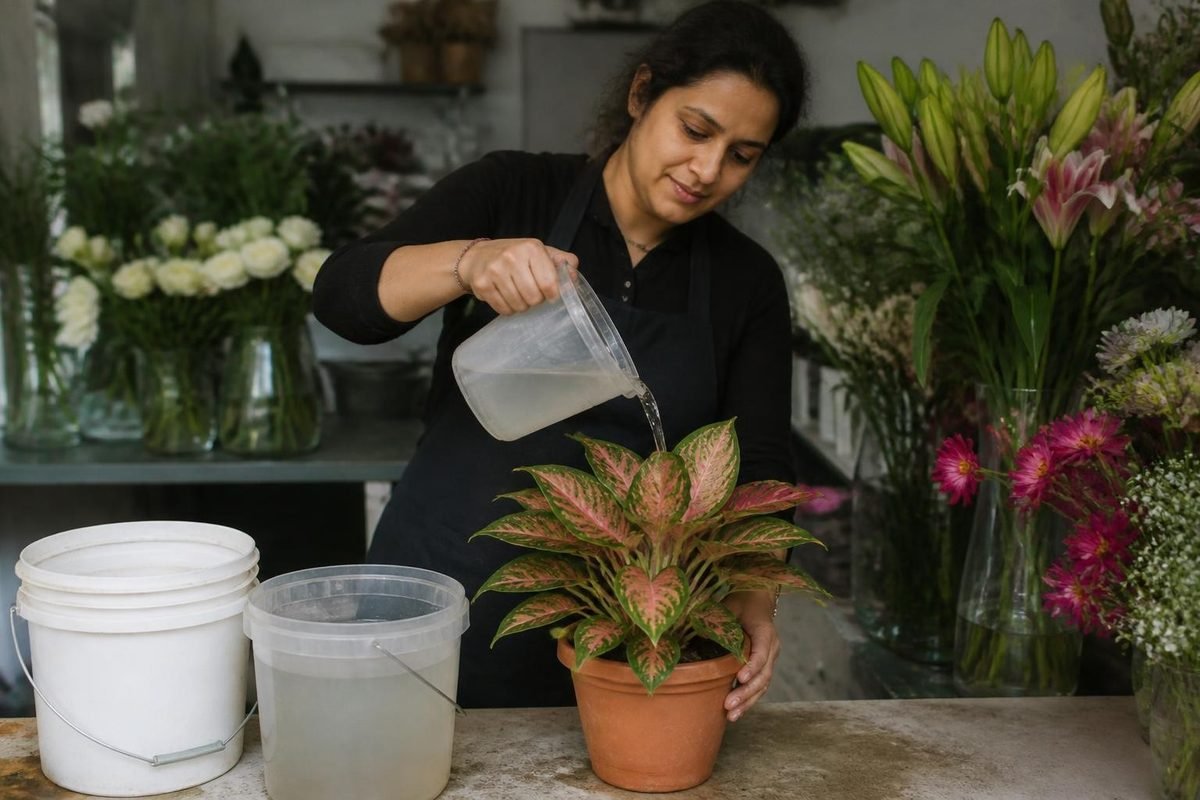
Florists can reuse conditioning water for ornamental plants only when they know it contains plain water and has no signs of contamination. Keep any water with flower food, disinfectant, another treatment, or an unknown history away from fresh stems, and dispose of it according to product instructions and local rules.
Check what each bucket contains
Before tipping a bucket into a watering can, find out what was added to it. Conditioning water may include flower food, a hydration treatment, bleach, or another cleaning product. Stems can also leave behind sap, fallen leaves, soil, and microorganisms.
Keep untreated water apart from buckets containing additives. Label containers so that anyone working nearby can tell them apart. Do not combine liquids you cannot identify in an attempt to make them usable. Cleaning products mixed together can release dangerous fumes or cause other chemical reactions.
If nobody can confirm what went into a bucket, do not reuse its water. That caution matters in a shared workroom, where one person may use a treatment that another person does not recognize.
Limit reuse to suitable plants
Water with no additives may be used on ornamental plants if the flowers were not treated with anything that makes the water unsuitable. Check product labels and local advice when you are uncertain. Do not use conditioning water on herbs, vegetables, fruit, or other plants grown for food.
Pick out leaves and other visible material first, then use the water promptly. An open bucket left standing can develop odors and attract insects. Pour the water onto the soil rather than over leaves, and stop if the plant appears damaged.
- Reuse water only when you know what it contains.
- Do not put treated water into watering cans used for plants.
- Set aside water that is cloudy, foul smelling, or visibly dirty.
- Keep reused water away from places used to prepare food.
A strainer can catch stems and leaves, but it cannot remove dissolved chemicals or reliably make water sanitary. A bucket that looks clear may still be unsuitable for a particular use.
Keep new flowers and tools clean
Fresh cut stems need clean water in clean containers. If old conditioning water goes into a new flower bucket, microorganisms and plant debris can reach the fresh stems. Mix a fresh solution instead, following the flower food instructions.
After use, empty each bucket and remove plant matter. Wash its inside with detergent and water, then rinse it thoroughly. When disinfecting buckets, follow the product label for the correct dilution, contact time, and rinsing steps. Never combine a disinfectant with another cleaner.
For water containing flower food, disinfectant, or a treatment you cannot identify, check the product label and local wastewater rules before disposing of it. Do not tip it onto outdoor soil or into a storm drain.
Questions florists often ask
Is clear water safe to use again?
Not necessarily. Dissolved treatments and microorganisms may be present even if the water looks clean. Reuse it only when you know its contents and have a suitable second use.
What about water from wilting flowers?
Do not return it to buckets of fresh flowers. If it is dirty or has an unpleasant smell, dispose of it rather than watering plants with it.
Can boiling remove treatments?
Boiling does not reliably remove dissolved flower food or cleaning chemicals. Keep treated water separate and follow the appropriate disposal guidance.
On the same subject: read more